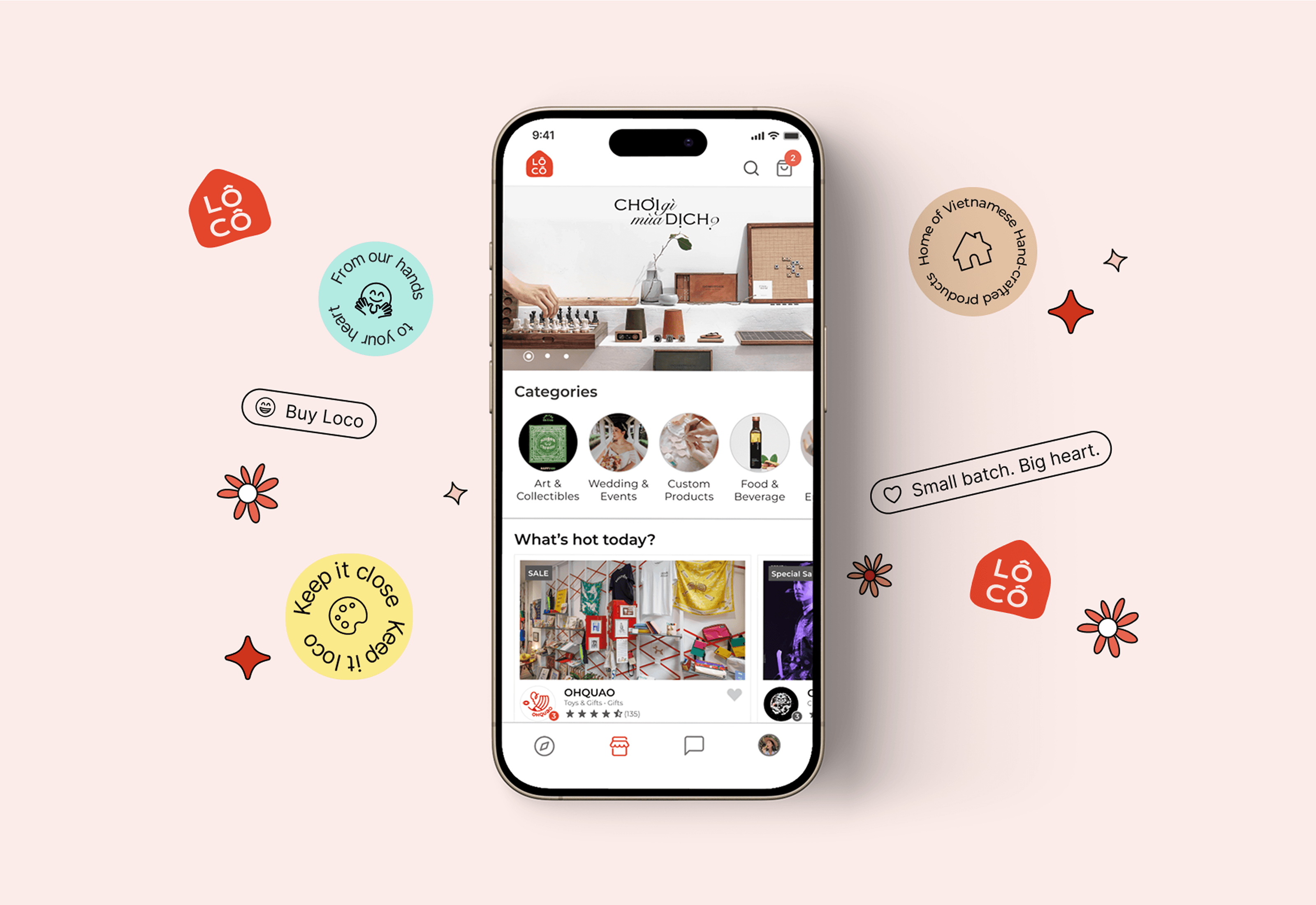
How It All Began
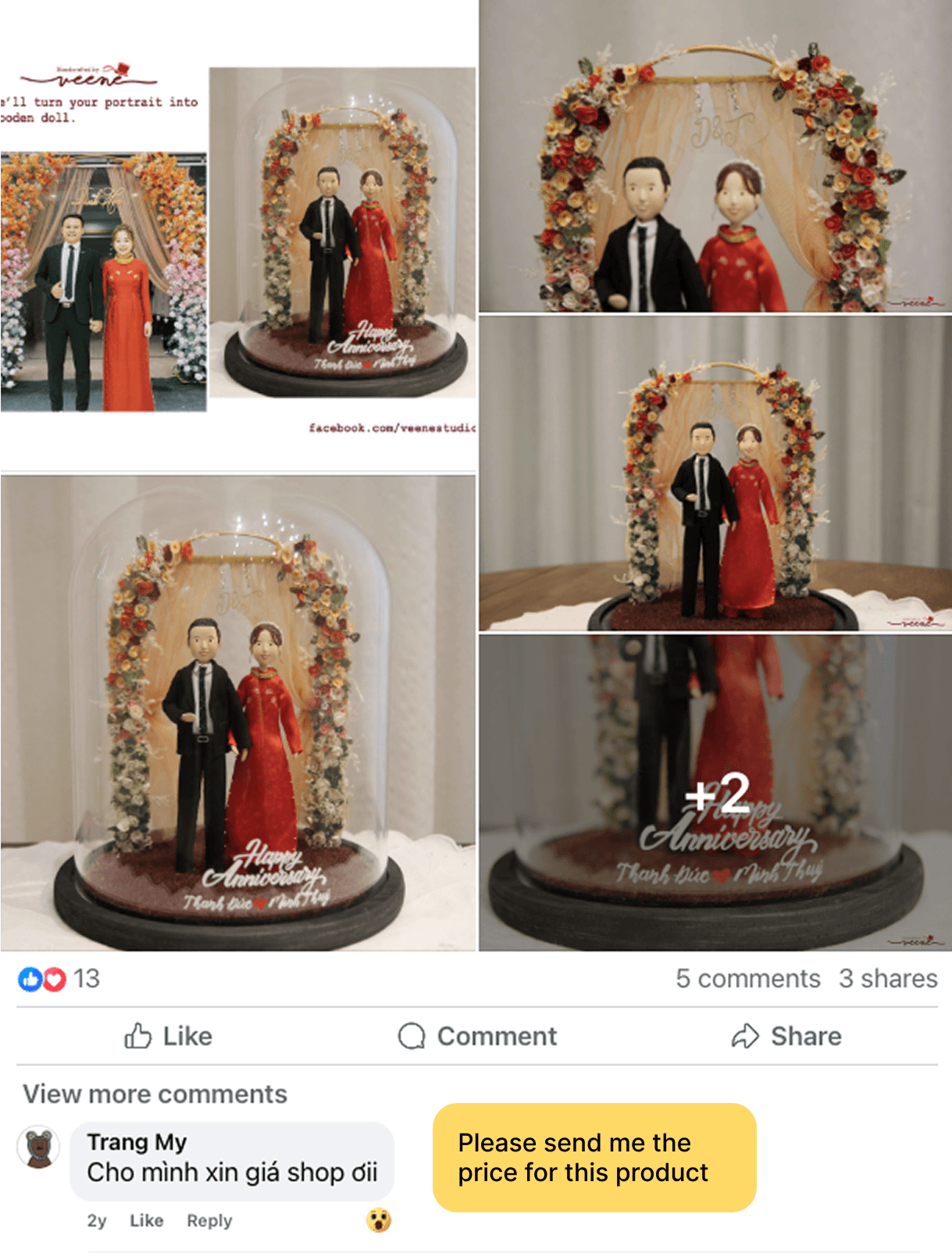
✳︎ 1 — In early 2021, I found myself scrolling through Facebook, where my feed was filled with Vietnamese artisans posting photos of their handmade goods — beautiful embroidery, pottery, weavings — often alongside "DM me to buy."
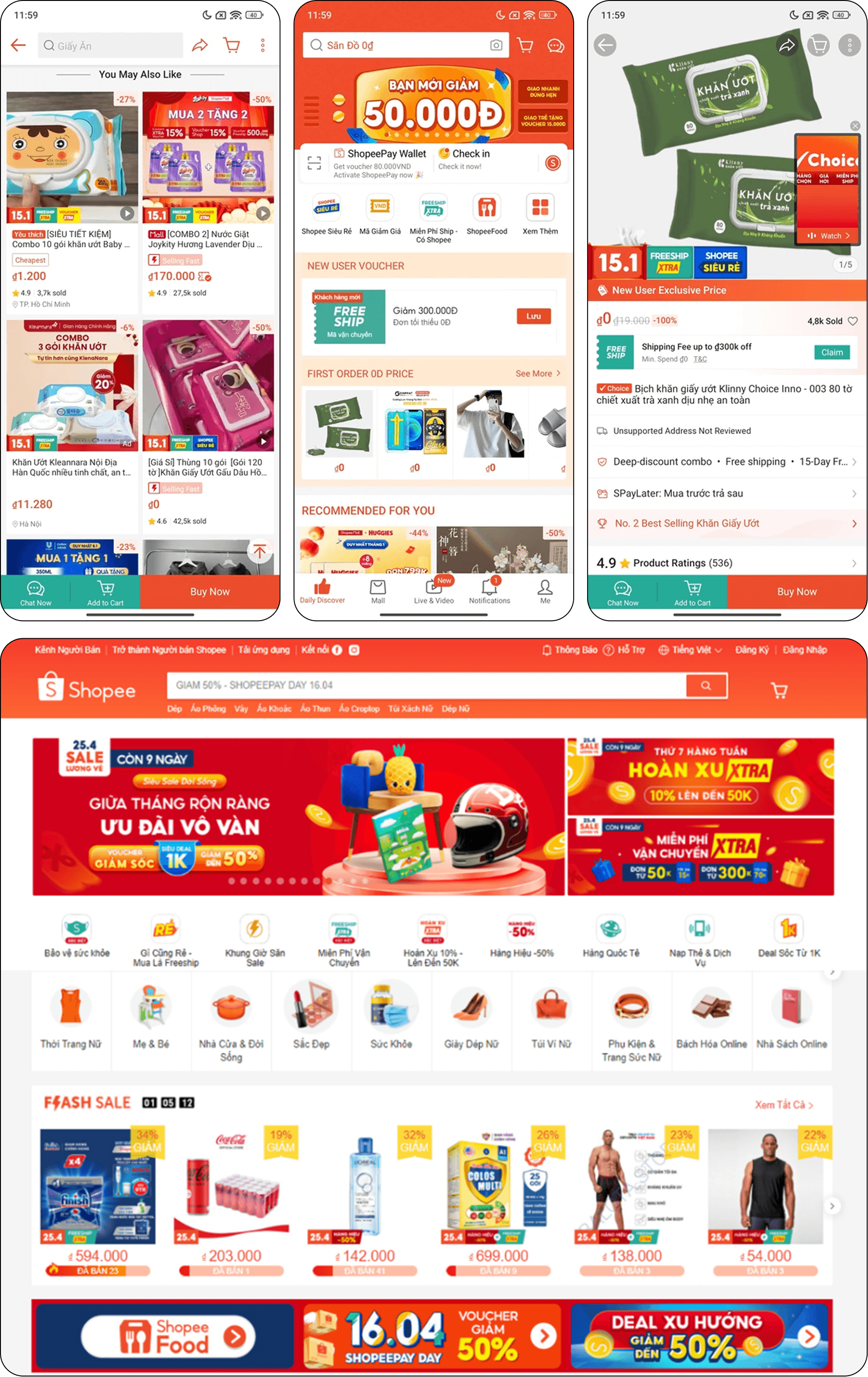
✳︎ 2 — At the same time, existing shopping apps prioritize big brands, ads, and flash sales: busy, promo-heavy UIs and generic product pages that don't tell the seller's story. Search algorithms have no filters for handmade or local, one-of-a-kind products.
Problem: Vietnamese artisans have the talent, the stories, the products — but they didn't have a place to truly shine.
The Vision
What if we build a digital space where Vietnamese artisans could share their crafts, tell their stories, and connect with people who truly appreciated the love and care behind every product?
Loco wouldn't be just another online shop. It would be:

Design Challenges
Differentiate Loco from mass-market platforms by focusing on curation, maker stories, and personal connection.
Create simple, low-friction seller and shopper onboarding that feels easy even for non-technical users.
Help shoppers feel confident buying from small, lesser-known sellers without big brand recognition.
People We Built For
When we set out to design Loco, we asked: who's struggling the most, and why? On one side, we met Vietnamese artisans, passionate about their craft but stuck in a digital world that wasn't built for them. During the pandemic, small businesses in Vietnam struggled to transition online; existing e-commerce platforms lacked a focus on handcrafted and customized products, and sellers faced issues with customer engagement, pricing, and logistics.
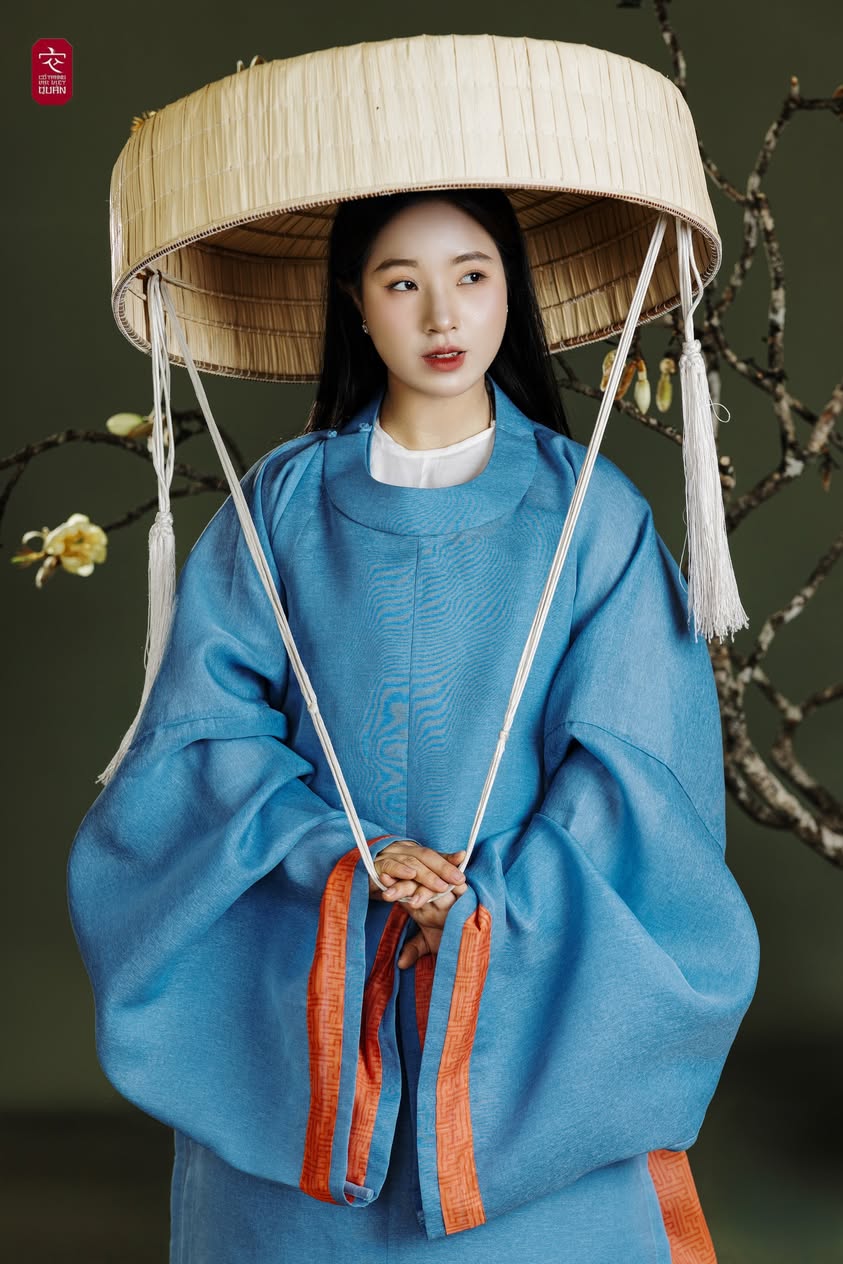
Specializes in making traditional costumes.
Frontline insights from a small F&B business.
Searching for something that feels personal.
Looking for trust before she buys.
By focusing on the real friction points, Loco wanted to create a shared space where sellers felt seen, empowered, and respected for their craft — and shoppers felt safe, inspired, and emotionally connected to their purchases. It is a meeting place, built for trust, stories, and slow-made goods.
What We Built
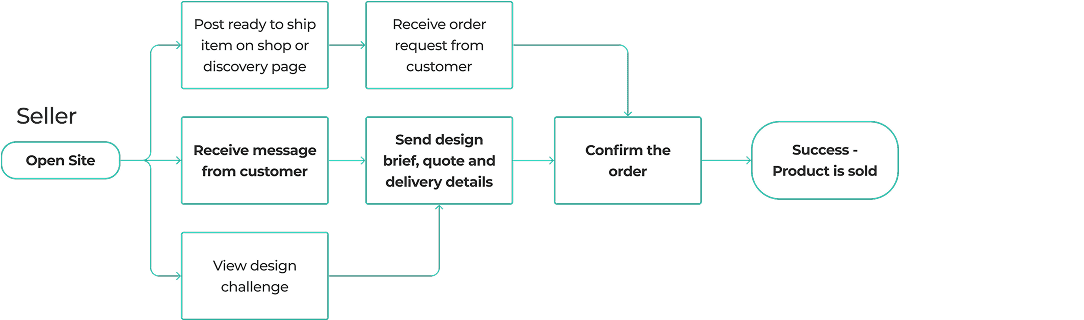
We were trying to build a bridge between the artisans and the shoppers. To make it work, we had to design for both — balancing simplicity with trust, storytelling with structure, and community with commerce.

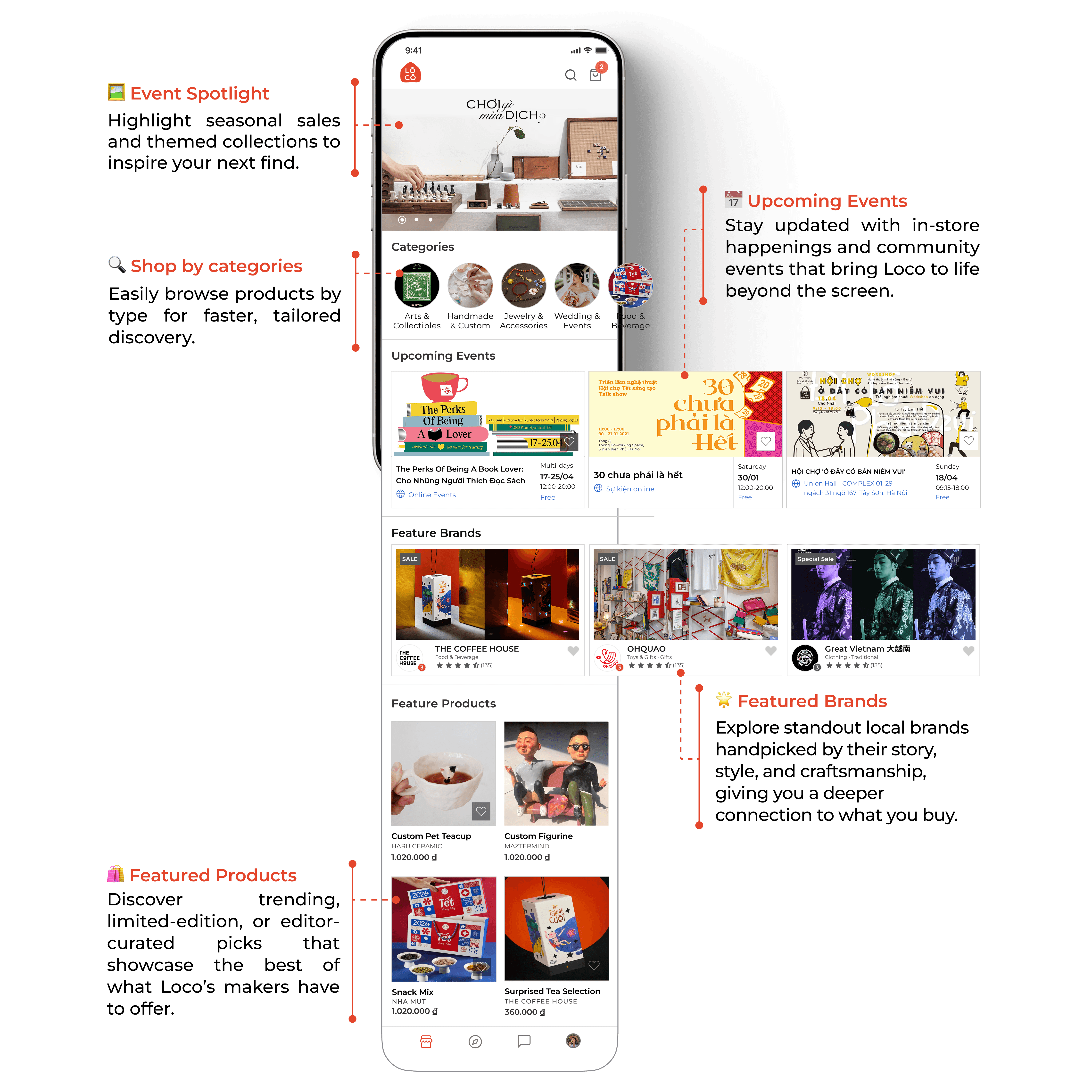
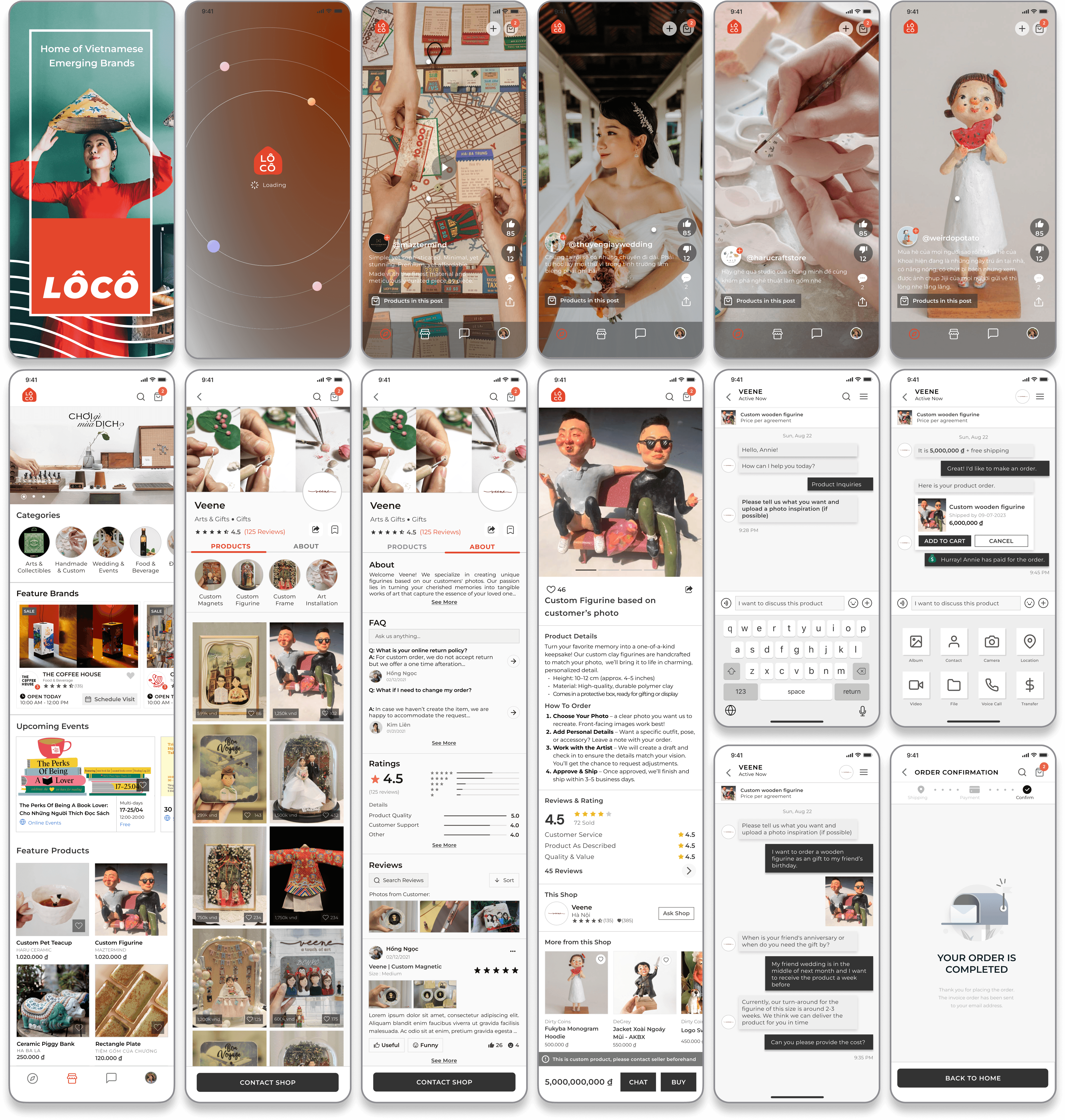
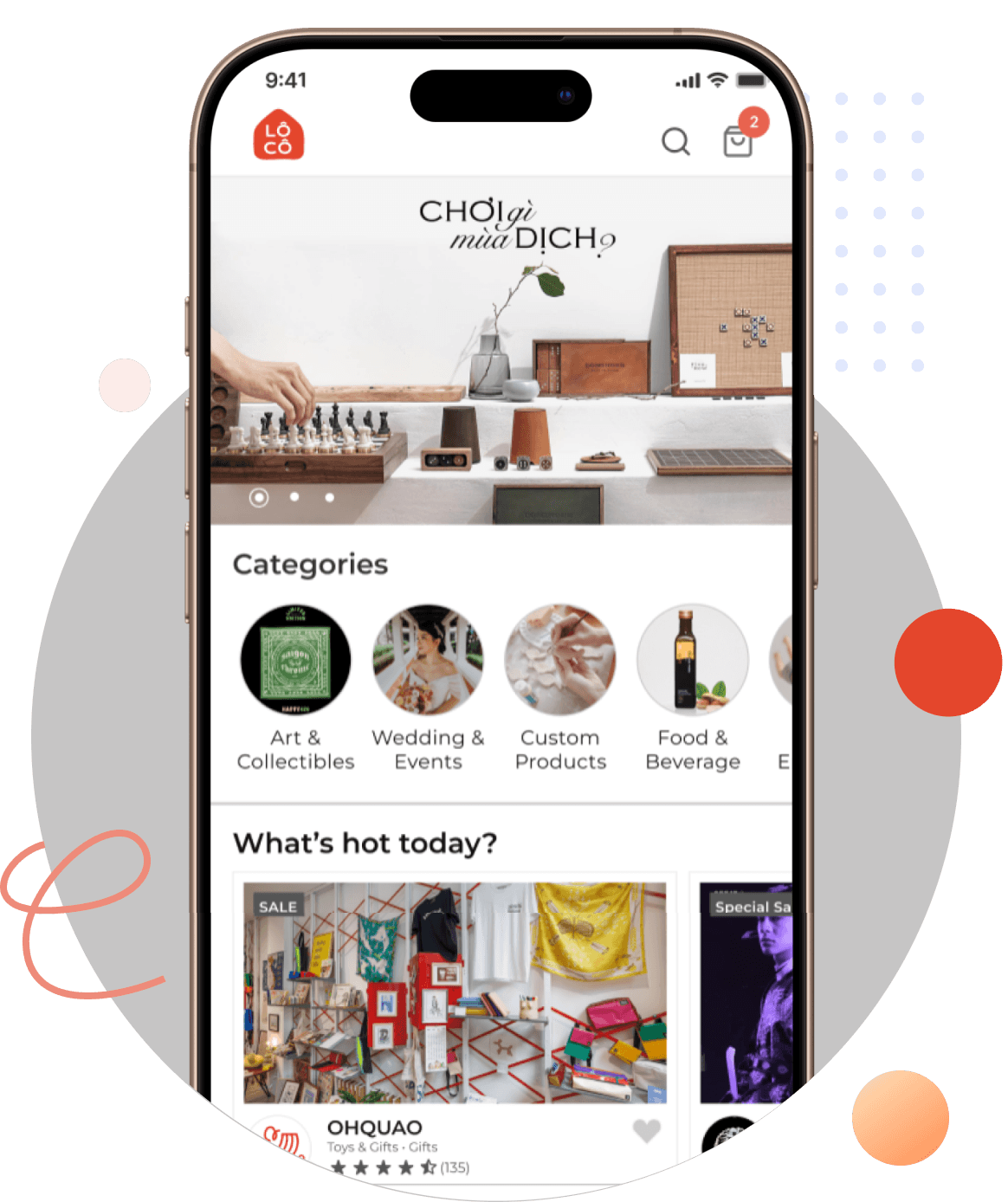
Scrolling through generic online stores didn't inspire shoppers. We designed the home discovery to feel like a weekend market: with curated gift ideas, local spotlights, and filters for material, region, and story.

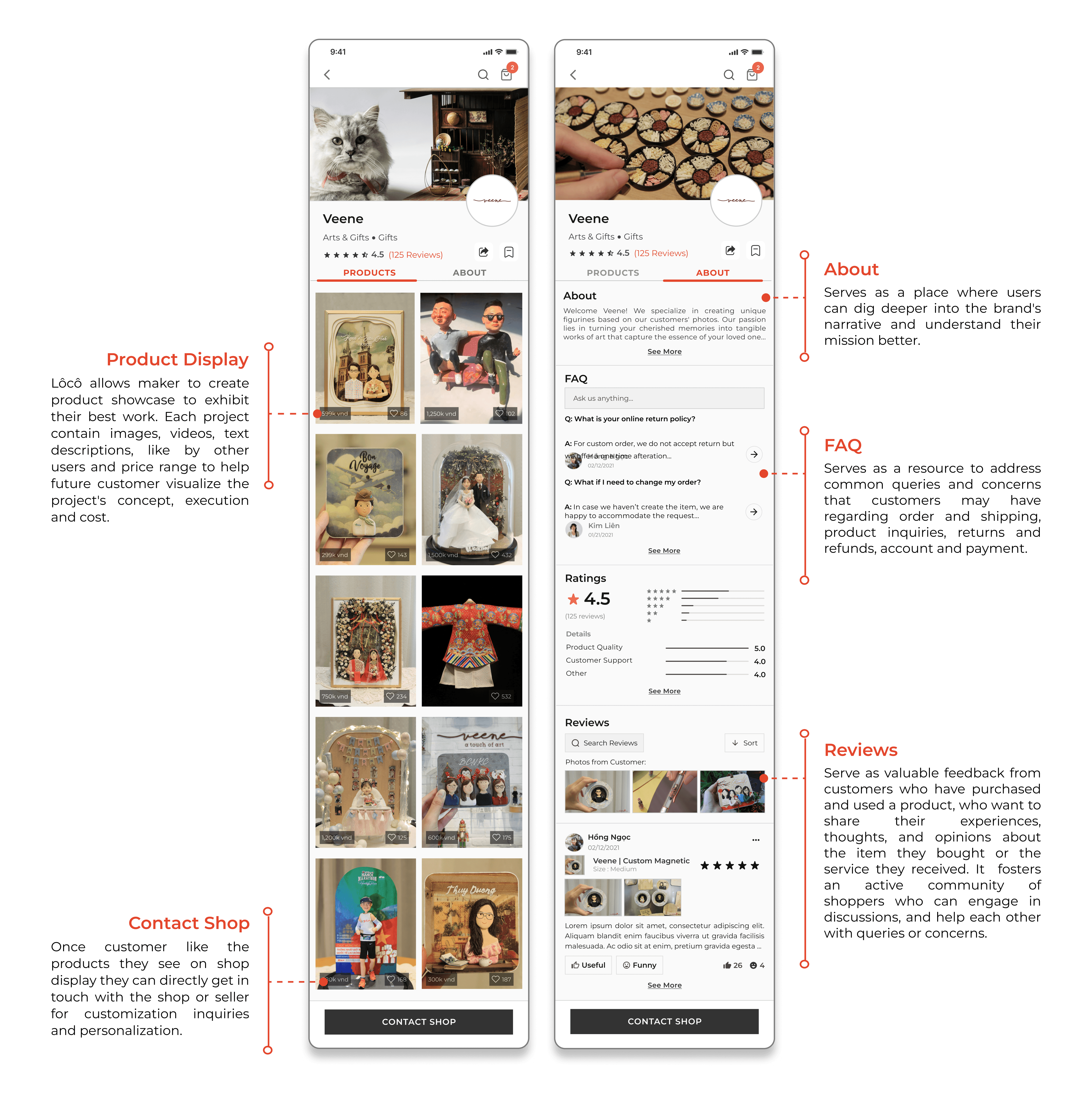
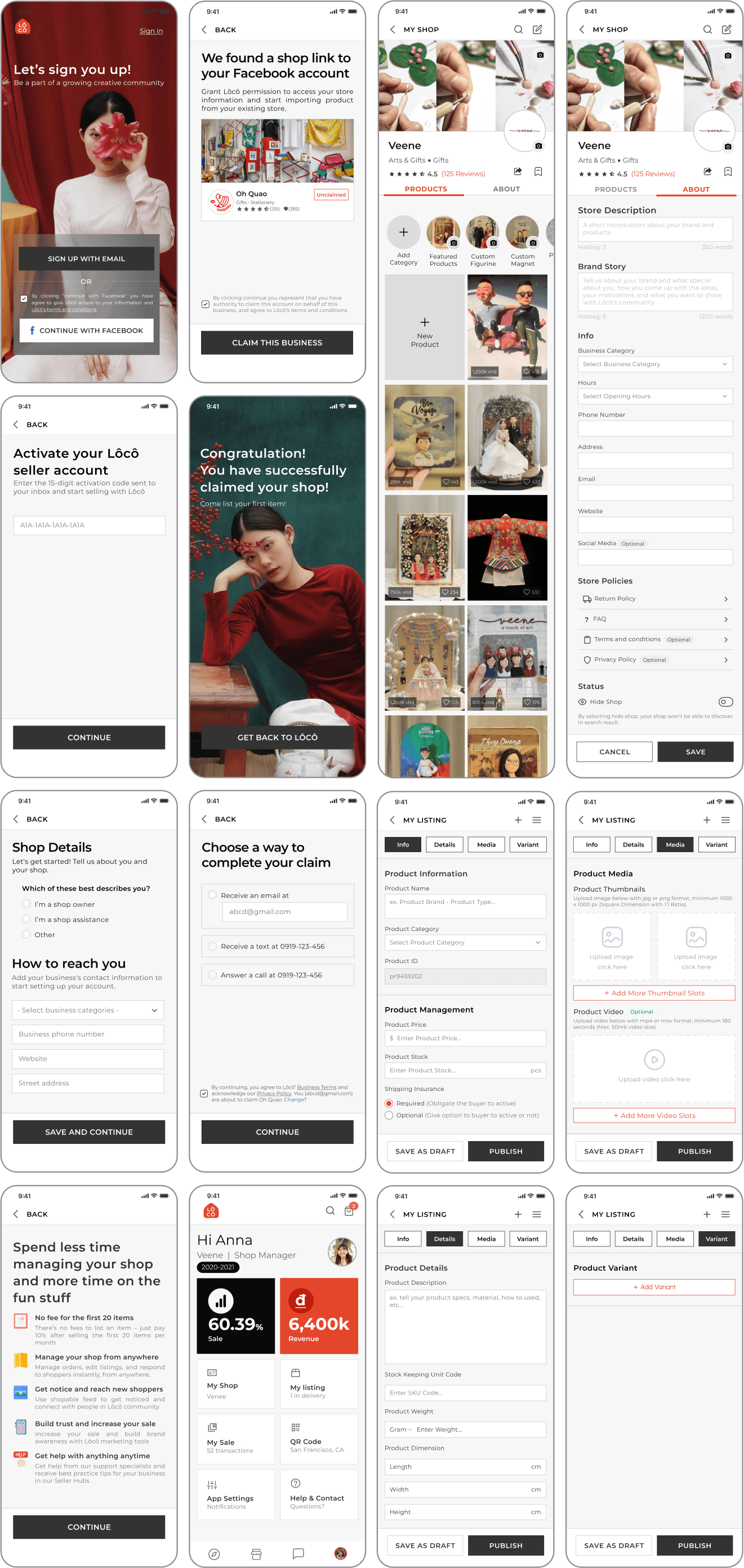
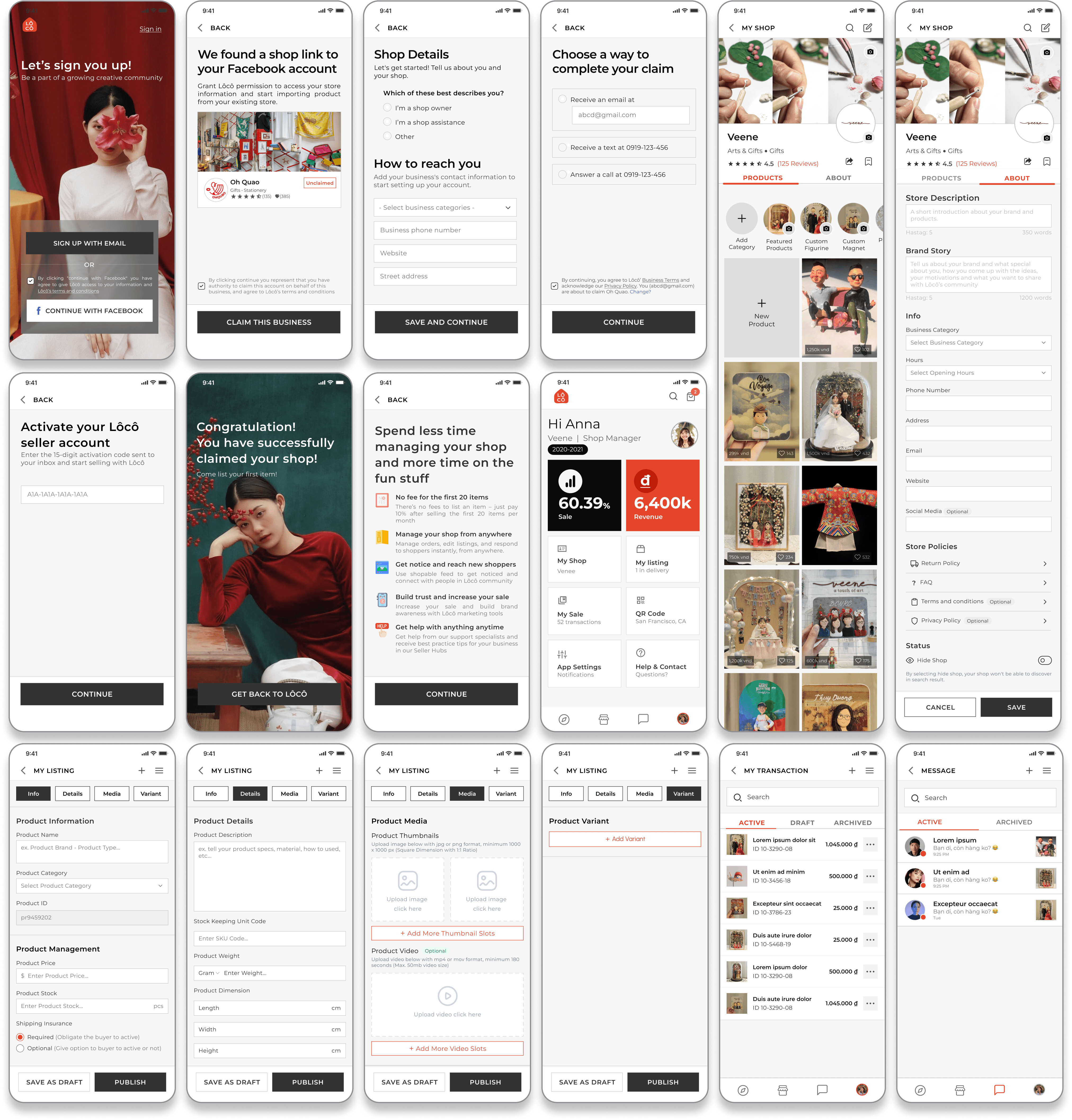
Many artisans were used to posting products on Facebook, buried under comments, likes, and messy threads. Loco creates the storefront, where they can share their story, display their products, and show the process behind their work.
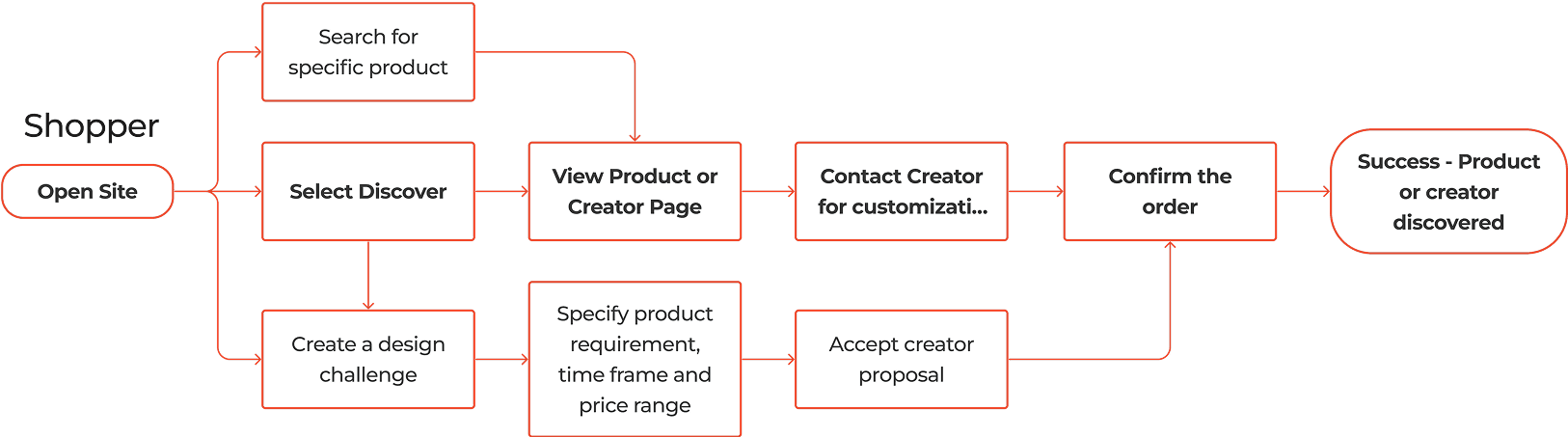
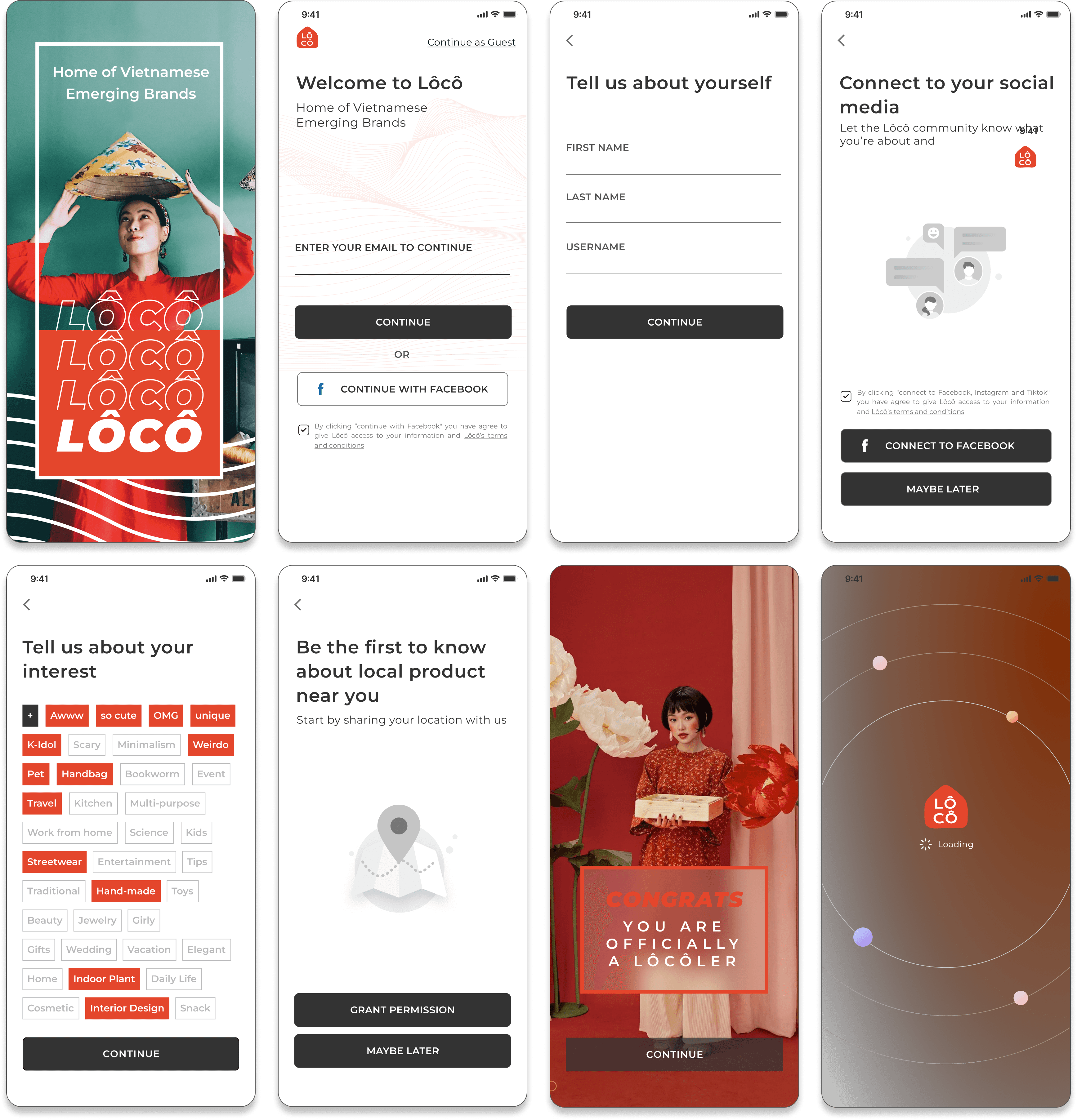
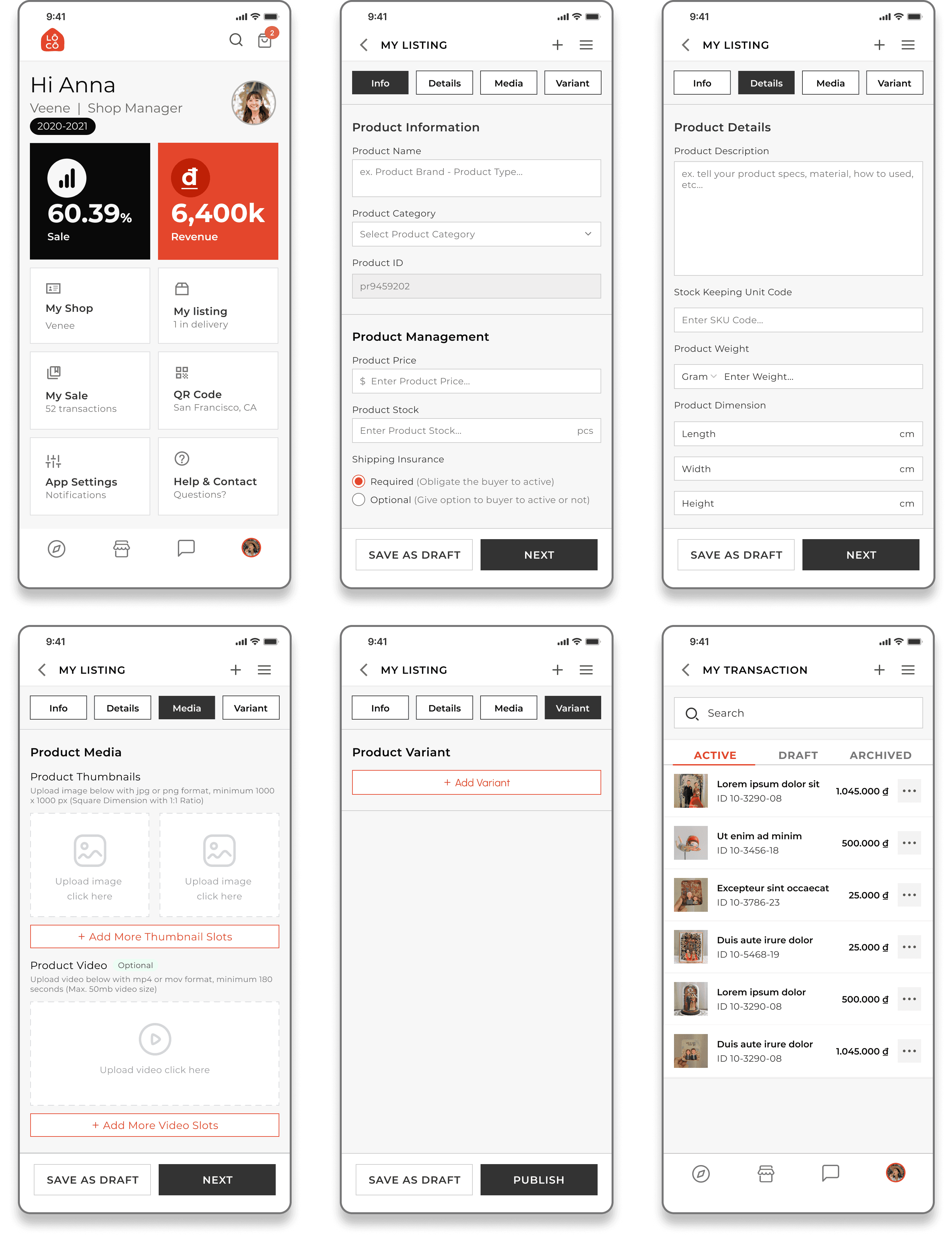
Most artisan sellers weren't tech-savvy. They just wanted a way to upload their work without jumping through hoops. So we made it easy: take a photo, write a few words, publish. No stress. No design degree required.
User Test
As we put Loco in the hands of real users, the product started to evolve. Early tests with Vietnamese shoppers quickly revealed they weren't just browsing — content alone wasn't enough; shoppers wanted to see movement, excitement, reasons to come back.
We also had to rethink our feature priorities and reintroduced in-app chat, which turned out to be a game-changer. Vietnamese buyers preferred confirming stock directly with sellers, often chatting first, buying later. That single behavior completely reshaped how we approached the buyer–seller relationship.
We knew shoppers weren't just looking for a product — they were looking for inspiration. Shopping Reels are short, scrollable videos to make the marketplace feel more alive.
In Vietnam, shoppers like to ask questions, confirm availability, or just chat before deciding. That's why we built messaging so buyers could connect with sellers naturally.
The Impact
Strong initial demand, validating the product's value proposition.
Two interviews with Y Combinator, demonstrating the market potential and scalability of our vision.
Used user insights to shape our next direction, ensuring the product better served both sellers and shoppers.
But growth wasn't easy. Despite our design and vision, Loco struggled with user acquisition and retention. Vietnamese e-commerce is heavily driven by incentives — free shipping, discounts and loyalty perks. As a small team, we didn't have the funding to compete with giants like Shopee and Lazada, backed by Alibaba and Sea Group.
Getting people to keep a new app is tough — Vietnam's uninstall rate is 48%! Many users have older phones and are picky about keeping apps still in their early phase, facing the chicken-and-egg problem of growing sellers and shoppers.
Still, we gained clarity. Loco may not have scaled as we'd hoped, but it surfaced valuable insights that reshaped how we thought about local market fit and sustainable growth.
What I Learned
As the only designer and a co-founder, I wore just about every hat — from UI design to pitch decks to go-to-market strategy. It was my first true 0→1 experience, and the lessons were unforgettable:
What works in one market might fail in another. Learning how Vietnamese users browse, message, and buy forced us to let go of assumptions and build with cultural nuance in mind.
Shipping fast and testing in the real world gave us feedback we'd never have found otherwise.
Working side-by-side with engineers taught me how to design within real-world constraints and advocate for the user in every product decision.
Giving artisans space to share their journey didn't just make the app feel warmer — it made shoppers more likely to buy.
Loco wasn't just a design project. It was a crash course in product thinking, team collaboration, and what it takes to create something that matters for people whose livelihoods depend on it.
I am currently looking for a team where I can take part, learn from, and become a better designer (/human).
Let's Chat! ↗